Author: Eshwar Cherkuri
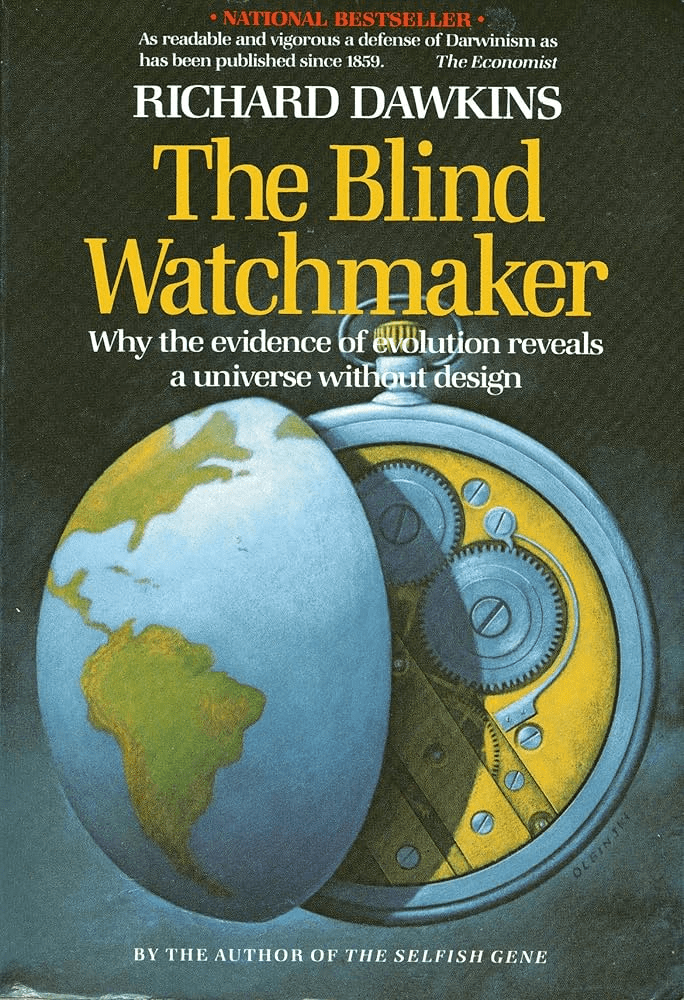
I think the most important point made in this essay is that the complex design and mechanisms seen in living organisms can be explained through the non-random process of cumulative natural selection over many years. Because of this, there is no need for the hypothesis of a conscious, intelligent designer, since that idea is neither verifiable nor necessary to explain what we observe.
One of the most important arguments supporting this conclusion is the distinction between simple selection and cumulative selection. This is crucial because it disproves the idea that evolution could have occurred through a single, massive act of chance. From a mathematical perspective, that would be essentially impossible. Instead, cumulative selection works through small, nonrandom changes that build up over many generations.
A second major argument involves the philosophical question of the origin of the designer’s own complexity. This challenges the idea that a highly complex entity could serve as the source of all organized complexity. It fails to solve the original problem, since it simply introduces something even more complex that also requires explanation. In contrast, evolution explains how complexity can arise from simplicity, making it the strongest scientific explanation. Introducing a more complex god only creates a deeper, unresolved question about that being’s existence.
Another line of reasoning comes from the computer simulation analogy, which demonstrates the power of nonrandom selection. The example shows how the phrase “Methinks it is like a weasel” can be produced through cumulative selection. This serves as strong evidence because it illustrates mathematically that natural selection is far more effective than random selection. While pure randomness would take an impractically long time, cumulative selection can reach the same result in a surprisingly small number of generations.
The book provides several examples to support Argument A (the distinction between single-step and cumulative selection). One example is the statistical likelihood of hemoglobin forming by chance, calculated at 1 in 10^164. This number is so large that it shows biological organization cannot realistically be explained by a single random event. Another example involves simple sieves, such as ocean waves sorting pebbles or materials passing through a filter. These demonstrate that while basic physical processes can sort matter, they cannot generate the kind of complex organization seen in living systems.
To support Argument B (the designer’s complexity), the text discusses the idea of “extensive guidance,” where some theological views accept evolution but claim that God subtly directs it. The author argues that this guidance is unnecessary—if it produces the same results as natural selection, then it adds no real explanatory value. The text also presents evolution as the default explanation, arguing that it is the only theory that logically explains how complexity arises from simplicity. The author even suggests it would remain the best explanation in principle, regardless of direct evidence.
Finally, for Argument C (the weasel analogy), the book highlights how quickly the simulation converges on the target phrase when using cumulative selection. By preserving beneficial changes, the system reaches the goal in as few as 40 to 65 generations. This demonstrates the efficiency of cumulative selection and contrasts sharply with the near impossibility of achieving the same result through purely random processes.
 The Megaphone