Author: Vrinda Iyengar
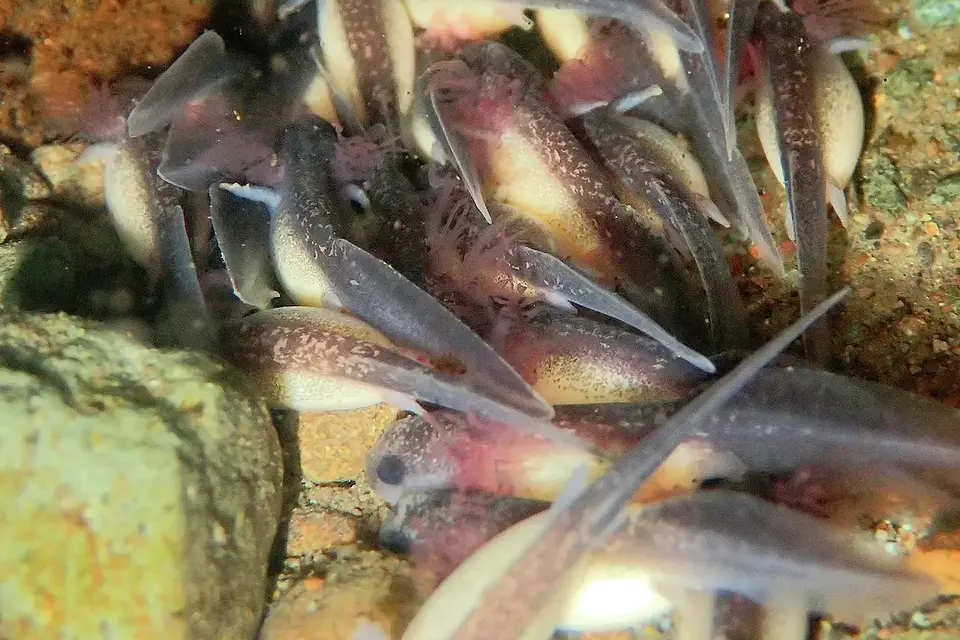
This past week, it was reported that a National Park Service scientist has photographed a group of newly hatched California giant salamanders in the wild for the first time. According to an article published by the Park Service last September, Michael Reichmuth, a fisheries biologist, found the salamander larvae while snorkeling in Olema Creek, a stream running through Point Reyes National Seashore.
Adult California giant salamanders can grow up to a foot long. However, it has historically been difficult to observe them. Usually, when a biologist wants to capture an amphibian, they place boards on the ground that create a moist shelter that would lure in the amphibian. However, California giant salamanders almost never show up in these traps.
The giant salamander is native and endemic to Northern and Central California and it is classified as a species of special concern by the state of California. Our limited knowledge of the species contributes to its classification, because, as a California Fish and Wildlife document notes that “we know little about the basic biology of this species, which makes it difficult to formulate management recommendations beyond minimizing disturbances to existing habitat.”
Patrick Kleeman, an amphibian expert with the U.S. Geological Survey noted that it is amazing that Reichmuth found the larvae and identified them at all, as so little is known about their development.
 The Megaphone