Author: Eric Lai
The art of the speech has long served as a catalyst for change, whether delivered from a presidential podium, a battlefield, or a fictional stage. These addresses often balance a thin line between profound inspiration and what some might call naivety, depending on the listener’s perspective on global affairs and human nature. By examining historical appeals for peace and justice alongside the iconic oratory of popular culture, we can see how the spoken word continues to shape collective identity and international morality.
Historical Appeals for Peace and Sovereignty
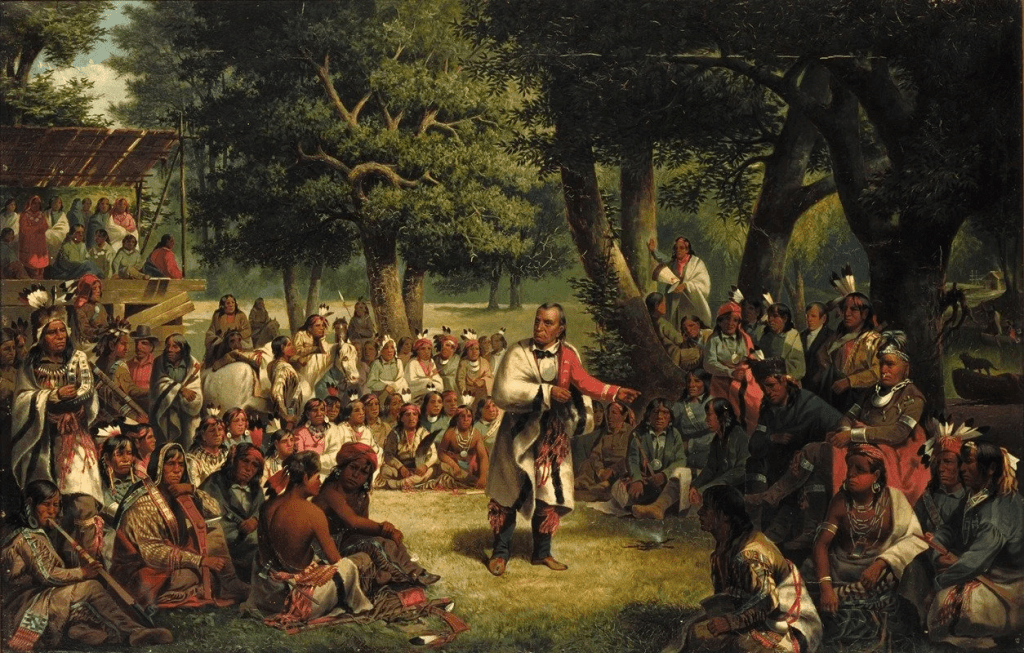
Some of history’s most enduring speeches were born from moments of deep crisis or transition, where leaders sought to define a new path for their people. In his “peace speech” at American University, President John F. Kennedy advocated for a genuine, lasting peace that enriched life on Earth rather than a peace imposed by weaponry or the silence of subjugation. He emphasized that this vision was not exclusive to Americans but extended to all people across generations. In a much earlier context, Red Jacket’s 1906 speech, “The White Man and the Red,” recounted the history of Native Americans being displaced by European settlers who initially arrived seeking a home due to religious issues. He questioned the imposition of foreign religion and suggested that if the settlers’ faith truly made them “nicer” to Native Americans, the indigenous people might consider its merits.
A different kind of plea was made by Emperor Haile Selassie to the League of Nations in 1936 following Italy’s invasion of Ethiopia. He detailed the horrors of mustard gas and “deadly rain” used against his people and questioned the value of international promises to small states when the concept of collective security fails. At the dawn of Indian independence in 1947, Jawaharlal Nehru’s “Tryst with Destiny” speech acknowledged the long struggle for freedom and called for a collective responsibility to eliminate poverty and ignorance, emphasizing that peace and freedom must be indivisible across the globe.
The Backbone of Society and the Individual
Other influential speeches have focused on internal national unity and the empowerment of specific social classes. Robert Menzies’ 1942 address, “The Forgotten People,” targeted the Australian middle class—the salary earners, shopkeepers, and farmers he viewed as the nation’s backbone. Delivered during the height of World War II, his words championed individual responsibility and self-reliance over excessive state intervention, ultimately revitalizing his political career and providing a foundational philosophy for the Liberal Party.
The Oratory of Fiction
While some dismiss political speeches as works of fiction, the speeches of fictional characters often resonate with the same emotional intensity as real-world addresses. In the film Braveheart, William Wallace established his authority and provoked introspection among his men by challenging their willingness to fight for freedom. His iconic declaration that while lives may be taken, freedom never will, has become a universal symbol of resistance. Similarly, the fictional President Whitmore in Independence Day unified a global audience against an alien threat by referencing the symbolism of July 4th and urging humanity to fight for survival.
In the television series The West Wing, President Bartlet addressed a nation grieving a terrorist attack, honoring the heroism of ordinary citizens and calling for compassion and national unity. A more personal form of political oratory appears in the film Love, Actually, where the British Prime Minister asserts his nation’s greatness and declares that a bully is not a friend in response to a one-sided relationship with the U.S. President.
Technology and the Reach of the Message
The effectiveness of these messages has always been tied to the medium of their delivery, as technology impacts the reach of news and entertainment. The intimacy of radio was crucial for Franklin D. Roosevelt’s “Fireside Chats,” allowing his reassuring tone to reach millions in their homes without the distraction of visuals. Similarly, Winston Churchill used radio broadcasting and powerful transmitters to project defiance across occupied Europe. As technology evolved, television added a visual dimension that famously swayed public perception in events like the Kennedy-Nixon debates and the “Miracle on Ice”. Today, the internet age brings streaming and social media, ensuring that whether a speech is historical or fictional, its power to shape public perception remains a central force in human communication.
 The Megaphone