Author: Grace Li
In this installment of the Megaphone Youth Register’s Student Spotlight series, we are excited to be joined by Addison Hernandez, the founder of Know Her Rights. With an advocacy-driven platform, Know Her Rights makes legal literacy more accessible for young women.
Q1. Please introduce yourself and the mission of Know Her Rights.
My name is Addison Hernandez, and I am the founder of Know Her Rights, a youth-led initiative focused on promoting legal literacy for young women. The core mission of Know Her Rights is to make legal knowledge accessible and understandable for girls and young people who are often left out of those conversations. Many laws that affect our everyday lives from our rights at school to protections online are written in language that can feel complicated to understand. Through educational content and outreach, our initiative aims to break down those legal ideas into clear and practical information so young women can better understand the systems that shape their lives, and feel confident advocating for themselves within them.
Q2. What interested you in joining Know Her Rights and its mission of promoting legal literacy for young women?
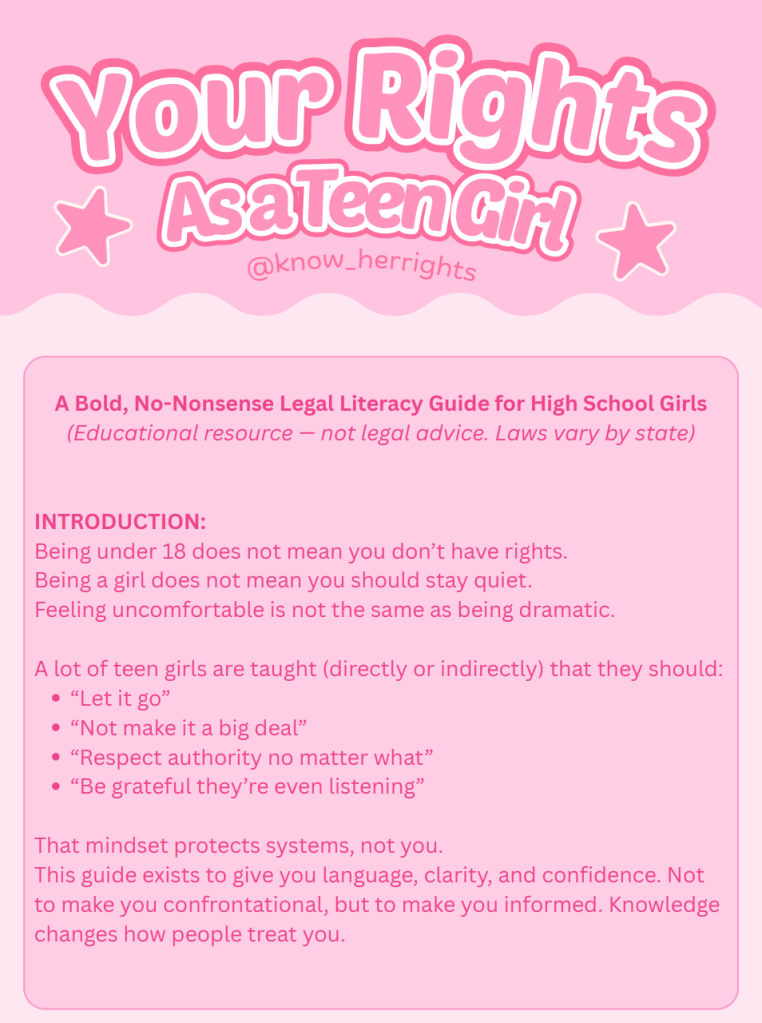
My interest in founding Know Her Rights really came from noticing how rarely legal knowledge is taught in ways that young people can actually access. In school we might learn about court cases for a history class or constitutional principles, but we rarely talk about how law shows up in our daily lives. At the same time, young women are navigating situations such as online spaces, school environments, or workplace internships, where understanding their rights can genuinely matter. Yet many people don’t know where to look to gain access to this information. That gap made me realize how powerful legal literacy could be. I started Know Her Rights because I wanted to create something that translated the law into language young people could understand, and more importantly, something that showed that understanding the law is a powerful tool for everyday empowerment that everyone should have access to!
Q3. What does “legal literacy” mean to you, and why do you think it matters today? Why do you think it’s important for girls under 18 to understand their legal rights?
To me, legal literacy means having a basic understanding of the rights, protections, and systems that shape your life, and knowing how those systems work well enough to navigate them. Legal literacy is so important because the legal system affects so many aspects of modern life, from digital privacy to education policies and workplace rights. Yet most people don’t encounter clear explanations of these issues until much later in life, if at all. For girls under 18 in particular, understanding their rights can be incredibly empowering. Many young people assume they have little agency because they’re minors, but that’s not entirely true. There are still important protections and rights that apply to them. When young women understand those rights early on, they’re more confident advocating for themselves, asking questions, and engaging with civic issues. Legal literacy gives them the knowledge and the awareness to feel that they can participate more actively in society.
Q4. What are some specific legal rights you think teenagers should be more aware of, especially in this digital age?
I think one of the most important areas today is digital rights and privacy. Teenagers spend a large portion of their lives online, but many don’t realize that laws around data privacy, harassment, and digital consent still apply in those spaces. For example, understanding what counts as online harassment, how personal information is protected, or what rights students have when it comes to their digital accounts can be incredibly important.
Another legal area important for teens to be aware of is student rights within schools. Things like freedom of expression, due process in disciplinary situations, and protections against discrimination. I also feel that around this age many teenagers think about part-time jobs or internships, so basic knowledge of workplace rights is valuable as well. Knowing what fair treatment looks like and what protections exist helps young people advocate for themselves early on.
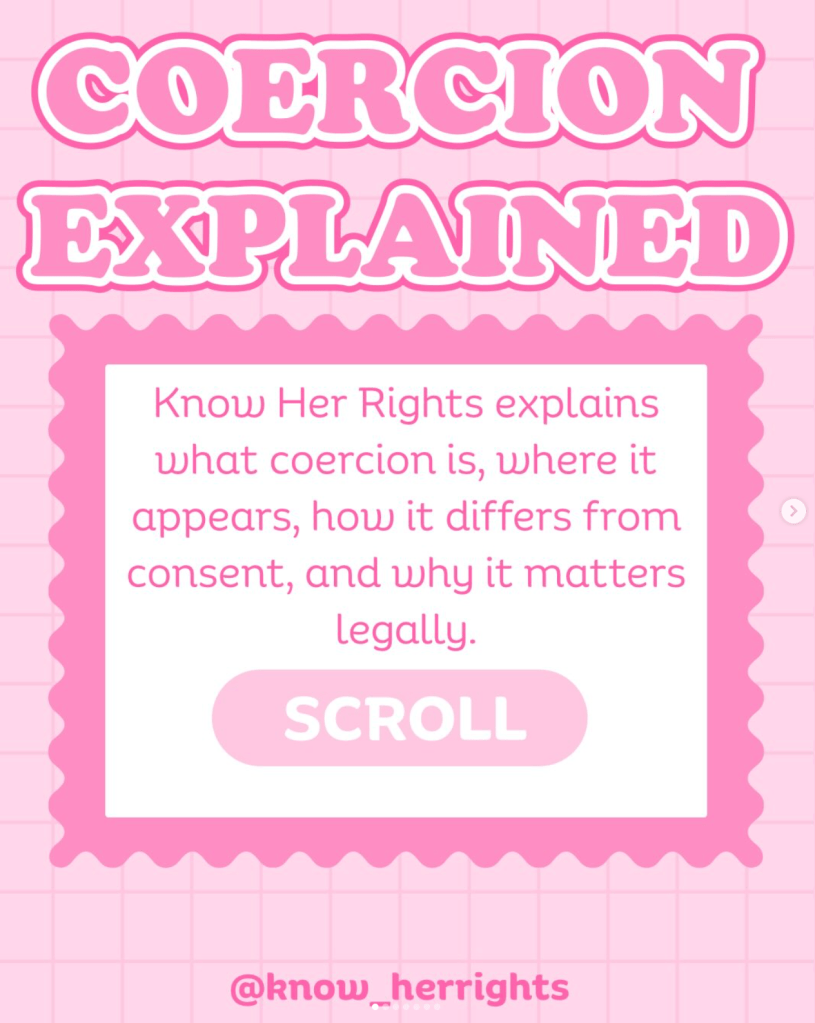
Q5. I noticed your post explaining legal terminology to help young people better understand their rights. Many legal concepts are written in complex language that can be difficult for teenagers to understand. How do you approach translating complicated legal ideas into content that is both accurate and accessible for a younger audience?
One of the biggest challenges in legal education is that the language of the law is often designed for precision rather than accessibility. When the Know Her Rights staff and I translate legal ideas into content for younger audiences, we always try to focus on three things. Clarity, context, and relatability. First, we will simplify terminology without losing the core meaning. We do a depth of research on the legal topic we’re covering, and condense all the legal jargon into the main ideas. That often means replacing technical language with everyday explanations that are actually understandable. Second, we connect legal concepts to real-life scenarios.
When people see how a law might apply to situations they recognize, like school policies, social media interactions, or part-time jobs, it becomes much easier to understand. Finally, we try to structure our content in a way that is informative, yet encourages curiosity as well. The goal isn’t to make people feel like they need to become legal experts, it’s to help them feel confident asking questions and learning more.
Q6. What are the organization’s biggest goals for this year, and how can students aid in your mission?
One of our biggest goals this year is expanding the reach of our legal literacy resource guides. In addition to our posts, we’ve been developing printable and downloadable PDFs that explain important legal concepts in greater depth (found on our website). These guides are designed to break down topics like rights in school, digital safety, and other areas where young people often lack clear information. The idea is to create resources that students can not only read online, but also share, print, and use in their own communities, whether that’s in schools, youth organizations, or student clubs. We want these guides to function almost like a toolkit for legal literacy that young people can easily access and pass along. Because of that, we’re always looking for students who want to get involved.
Some help by joining our team and contributing to research or content development, while others support the mission by sharing the guides within their schools or local communities. We also may be looking to develop local chapters this year, but more information will come on that later. Ultimately, we really want to make legal knowledge more accessible and to create a network of students who are helping bring these resources to the people who need them most, so we welcome anyone to reach out with interest in contributing!
Thank you so much to Know Her Rights for joining us in this interview! Please find their work here: linktr.ee/know_herrightss
 The Megaphone