Author: Grace Li
How do we increase period equity for people who menstruate in STEM spaces? In this interview, we speak with Monica, the founder of STEM the Flow, who works to tackle this issue through advocacy and awareness campaigns to create more inclusive and supportive STEM environments.
Q1: Please introduce yourself and the mission of STEM the Flow.
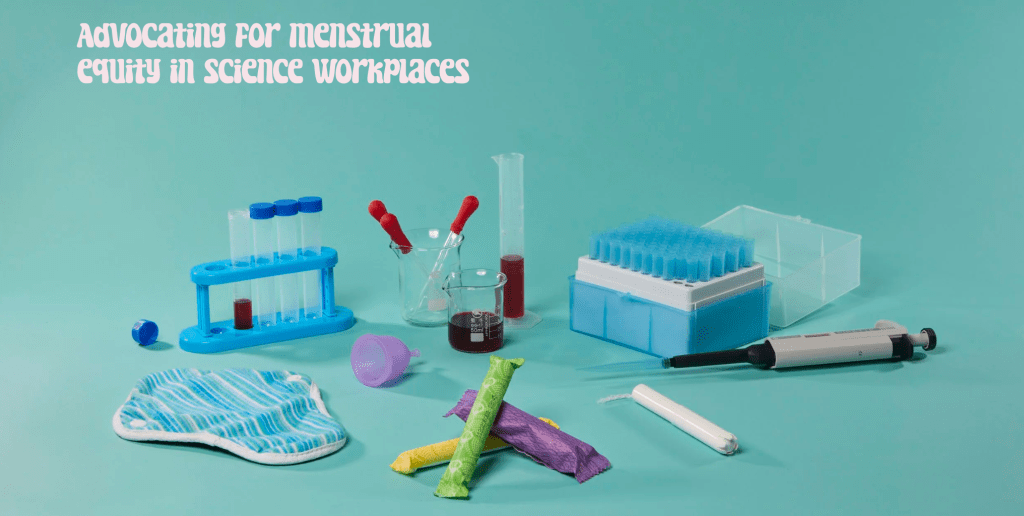
My name is Monica Fabra and I’m an environmental scientist and founder of STEM the Flow. STEM the Flow is a non-profit awareness campaign that aims to address period inequity in scientific education and workplaces. Period stigma, limited access to appropriate resources, and insufficient institutional support keep creating obstacles that hinder full participation and career progression in STEM fields. Our mission is to address these challenges to create more inclusive and supportive STEM environments where every scientist can participate fully and thrive, regardless of their menstrual status.
Q2: Was there a specific moment or experience that made you realize period inequity was a problem in STEM spaces, and that we need to spread awareness for this topic?
Throughout my entire career, I personally struggled to manage my periods while working in labs or in the field, because of the physically and mentally demanding nature of scientific work. However, what truly inspired me to launch STEM the Flow was the community around me. Over the years, I heard countless “horror” period stories from friends and colleagues about pain, challenges, embarrassment, lack of support, and feeling unsafe at work. It became clear to me that these weren’t isolated experiences, but a systemic issue that no one was addressing. One day, I just decided I had enough!
Q3: How do you think conversations about menstrual health and accommodation can improve STEM fields for everyone?
I believe that open conversations about menstrual health could help dismantle the stigma and create more honest and inclusive STEM workplaces. When institutions acknowledge menstruation as a legitimate workplace consideration, it leads to better support systems, clearer policies, and more ethical working conditions. This doesn’t just benefit those who menstruate but it improves team culture, communication, productivity, and overall wellbeing. Inclusive environments would allow scientists to focus on their work rather than managing unnecessary barriers, which would ultimately benefit STEM workplaces as a whole.
Q4: What are some of the biggest misconceptions about menstruation in professional or academic STEM environments that you’re trying to break down?
One major misconception is that menstruation is a “personal issue” that doesn’t belong in professional or academic discussions. In reality, menstruation can significantly affect physical and mental performance, especially in demanding research settings like labs or field. Ignoring this simply contributes to marginalise people. We’re working to promote menstrual equity as a workplace inclusion and health and safety matter, rather than a weakness or inconvenience.
Q5: What moment are you proudest of with STEM the Flow?
I’m proudest of creating a space where scientists feel safe sharing their personal period experiences and traumas, as well as advocating for them. STEM the Flow has started conversations that were previously taboo, particularly in male-dominated settings like STEM institutions, and it’s currently helping validating experiences that these institutions have long ignored. This cultural shift, even if at an early stage, is something I’m incredibly proud of!
Q6: How can individuals help support period equity and the mission of STEM the Flow?
Individuals can support period equity by talking openly about menstruation, challenging stigma when they encounter it, and advocating for inclusive practices within their institutions. However, this is not just the responsibility of those who menstruate. Allies of all genders and backgrounds play a critical role in creating truly inclusive and equitable STEM environments, as well as initiatives like STEM the Flow. Supporting our mission by participating in our anonymous online survey (only for scientists), by donating (we’re a fully self-funded initiative), and by spreading the word and sharing our work can really amplify our message and help building momentum for change.
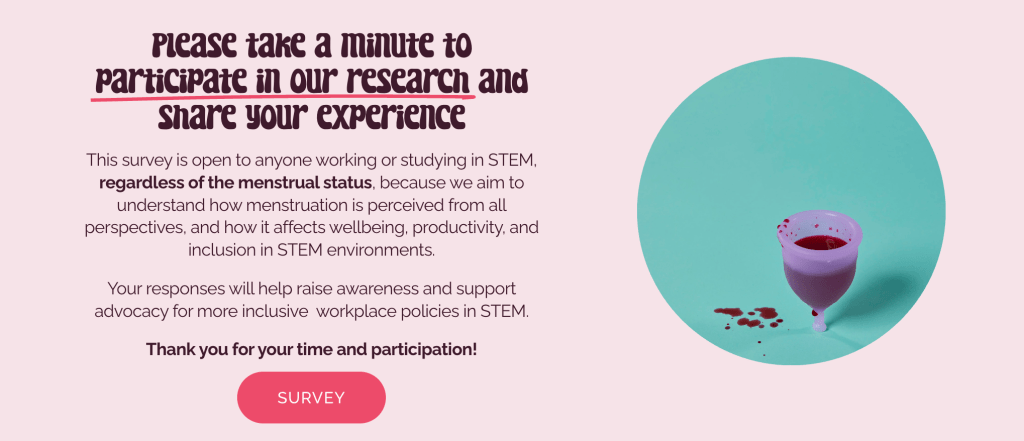
Take the survey at this link: https://docs.google.com/forms/d/e/1FAIpQLScwjIgsDWxigM2BAZkJ-BPc_YXPxJ4lMKUIPze5poO1XyKAMA/viewform?usp=header
Biggest thanks to Monica for joining us on this interview! Please check out STEM the Flow’s work here: https://stemtheflow.com
 The Megaphone