Author: Jen Johnson
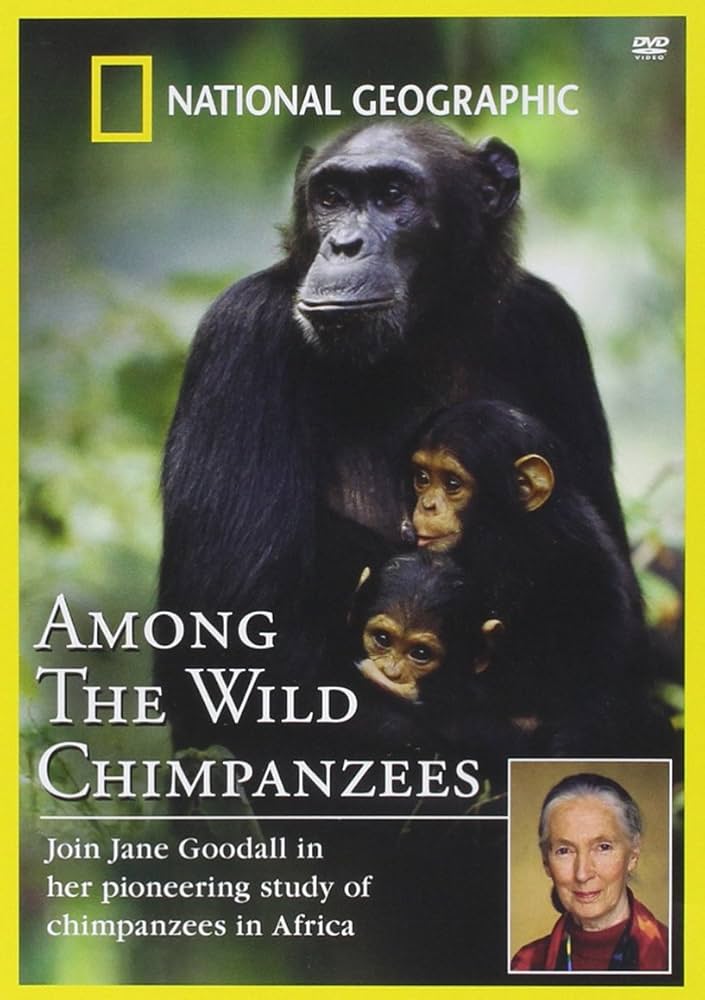
The film “Among the Wild Chimpanzees” follows the journey of Jane Goodall studying chimpanzees. She learns that chimpanzees share similar behavior to that of humans. In particular, she learns of the similarity in having a complex range of emotions, such as having empathy (reassuring others with touch), joy, and anger, using tools in multiple aspects of their lives (such as gathering food), and also the dynamics in social groups formed in chimpanzee communities forming parallels with communities in human society.
Throughout the film, certain traits observed are shown to be male-centered, including being territorial and aggressive. During the fight for hierarchy, dominant males in different groups will aggressively fight each other for dominance. However, males not only use aggression to fight for dominance, they also use their intelligence in order to show dominance, one example being Mike, who uses cans to scare off other chimps with the sound of cans rolling.
An interesting aspect of chimpanzee society would include cooperative hunt, in which chimpanzees will cooperate and hunt and capture prey such as baboons and bush pigs in groups, and by being in groups, they increase their efficiency. After successful hunts, they divide and share the meat to other chimpanzees.
Among the chimpanzees, there is evidence of polygny shown in the film. Dominant male chimpanzees mate with multiple females, increasing the chances that their genetic traits will get passed on to future generations and also asserting dominance in the community. From my personal experience, I have not seen this in my community. However, I understand that in the past, human rulers often had the practice of having multiple wives to try to have many children, so more people could pass down their name and lineage.
Behaviors essential to the beginning of hominid behavior are behaviors such as communication, understanding emotions, and tool use. For example, the use of different forms of communication, such as the use of gestures and facial expressions, are some aspects to communication that are essential to the beginning of hominid behavior. While these behaviors alone do not make us human, these behaviors are important in shaping us to be who we are today. We display these traits, and our societies are often based off of these traits. So although these traits of being communicative, having empathy, and use of tools does not encompass what makes us human, it is a major part of being human.
 The Megaphone