Author: Jen Johnson
Introduction:
Our lives are significantly impacted by the relationship between genetics and environmental factors. Although genetics serves as a main determiner for our traits, environmental factors such as diet heavily influence how our traits are expressed or alter our genetic code. Genes can be activated or suppressed through environmental factors, and this results in a variety of phenotypic differences. In order to further our understanding of health, exploring the complex relationship between genetics and environmental factors is crucial. In this essay, I will explore the relationship between age and disease.
Aging: An Environmental Factor
Age is an environmental factor that changes the genetic makeup of us humans. Throughout years of living and continuous cell division, mutations, mistakes in our genetic code, accumulate. Due to the fact that our genes must undergo the process of replication for repair and growth, as we grow older, the errors that occur during replication increase exponentially. This exponential gain in mutations in our genetic code is a huge reason why our health deteriorates as we age.
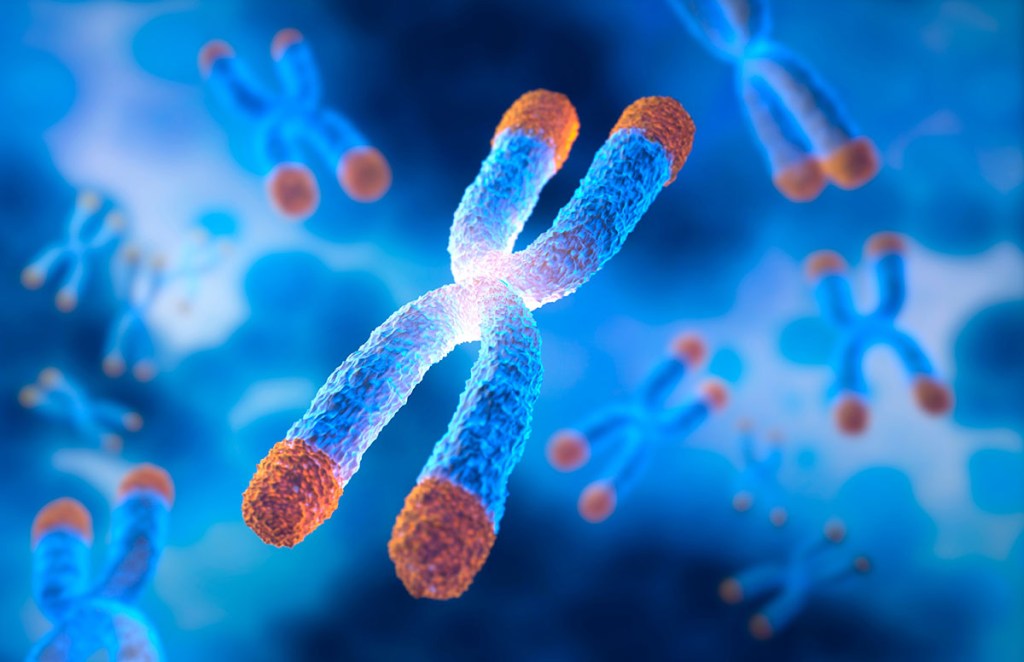
Telomeres are repetitive sequences located at the ends of human chromosomes, and are known to play a crucial role in genome stability. Incomplete DNA replication in human cells causes a constant loss of genetic info, so the existence of telomeres prevents this. They are a significant part of the aging process, serving as a counteraction to the loss of genetic code through replication errors. Their length is known to be relative to the amount of cell division a cell has undergone. Continuous loss of telomeres induces senescence, which stops cell division. Shorter telomeres are associated with replicative senescence, which indicates cells that have gone through enough cell division that there are many DNA mutations, making it likely to become a cancer cell (Learn.Genetics). Induced senescence due to telomere shortening stops cell division at appropriate times and reduces probability of cancer cells.
Recently, it has been found that telomeres create looping structures complementary to regions of DNA, a process called telomere positive effect over long distances (TPE-OLD) (Kyung-Ha et al.). Growing evidence proves that this telomere looping silences targeted genes, inhibiting their expression. The loss of telomeres through numerous cell divisions can therefore create changes in the prior inhibition of these genes, and cause these genes to now be expressed. This stopped inhibition of certain genes after telomere shortening may explain why senescent cells show significant alterations in gene expression, a topic which may be further explored in the future.
Relation between Cancer and Aging
Cancer is known to be caused by oncogenes in our body. Proto-oncogenes are genes that regulate differentiation and cell division, and help cells grow and divide to make new cells. When proto-oncogenes are mutated or there are too many copies of them, they have the potential to turn into oncogenes in a process called activation. A number of mutations can cause activation, such as transduction, point mutations, and chromosomal translocations, all of which can be caused by mutations that accumulate as we age (Torry et al.). When a proto-oncogene becomes an oncogene, cells can begin to grow out of control, leading to cancer.
There is an exponential increase in cancer incidence in relation to age, which is largely attributed to an accumulation in oncogenic mutations. Copying our genetic material over and over again is bound to create some mistakes which accumulate over long periods of time, so the older we get, the chances for mutations or defective cells increase. According to City of Hope, with increases in age, the human immune system also becomes less efficient at killing cancerous cells before they multiply, so as the immune system’s response slows down, so does its ability to find and correct defects in cells.
In the research article, Regulation of Gene Expression by Telomere Position Effect, the authors state that short telomeres as a result of continuous cell division signal that the cell should either enter senescence or undergo apoptosis in order to prevent the creation of a harmful or cancerous cell, but cancer cells counteract this by producing more telomeres through the enzyme telomerase (Kyung-Ha et al.). During the fetal stage, telomerase is commonly expressed, but after this stage, most cells except specific stem cells do not express telomerase anymore. Maintaining telomeres that are not too short is key to the survival of cancer cells, so most cancers express telomerase to increase the length of telomeres and prevent senescence or apoptosis of cancer cells, allowing for continuous cell division.
Conclusion
Age is a significant environmental factor affecting almost every disease, including cancer. Older age is typically associated with higher rates of cancer. The interactions between age and our genetics can cause genetic mutations to accumulate as we grow older and therefore implicate diseases such as cancer. Additionally, the role of telomeres in gene expression in regards to age is a crucial aspect of aging to be considered when discussing aging as an environmental factor.
Works Cited
- “Cancer Risk by Age: What the Science Says.” City of Hope, City of Hope, 25 July 2023, http://www.cancercenter.com/community/blog/2023/06/cancer-risk-by-age.
- Torry, D S, and G M Cooper. “Proto-oncogenes in development and cancer.” American journal of reproductive immunology (New York, N.Y. : 1989) vol. 25,3 (1991): 129-32. doi:10.1111/j.1600-0897.1991.tb01080.x
- Lee, Kyung-Ha et al. “Regulation of Gene Expression by Telomere Position Effect.” International journal of molecular sciences vol. 22,23 12807. 26 Nov. 2021, doi:10.3390/ijms222312807
- “Are Telomeres the Key to Aging and Cancer.” Learn.Genetics, learn.genetics.utah.edu/content/basics/telomeres/. Accessed 22 Apr. 2024.
- Vijg, Jan. “From DNA damage to mutations: All roads lead to aging.” Ageing research reviews vol. 68 (2021): 101316. doi:10.1016/j.arr.2021.101316
 The Megaphone