Author: Hamza El Baraky
Today, I am joined by a behavioral technician working at Health Minds, to discuss everything: from tips to daily routines, to learnings and takeaways.
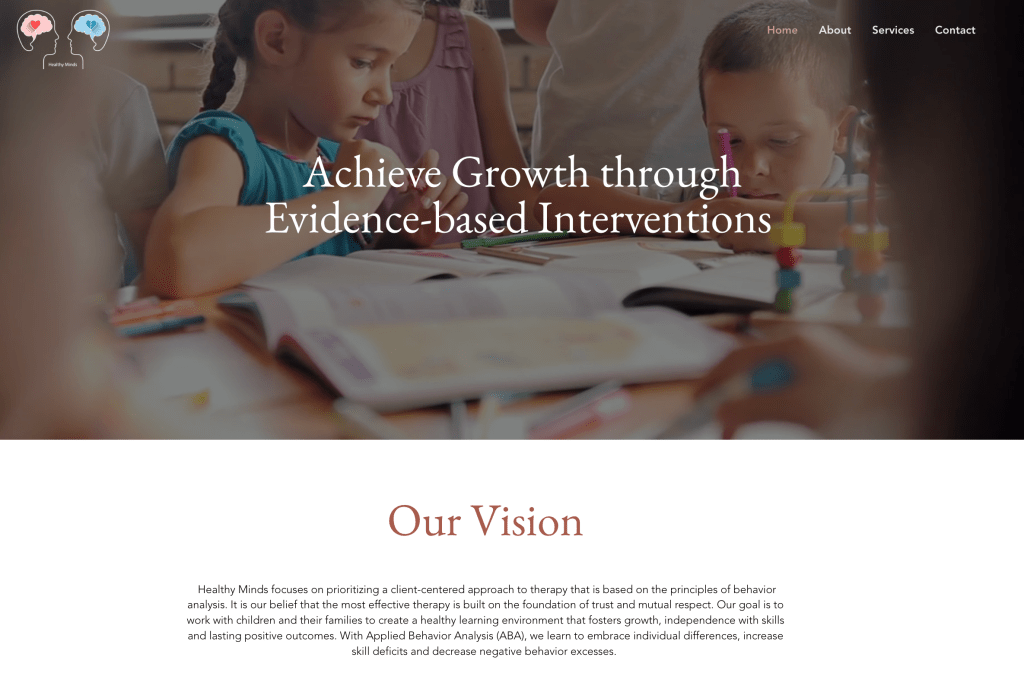
Q1: Please introduce yourself and your role as a Behavioral Health Technician at Healthy Minds.
I am a Behavioral Health Technician at Healthy Minds. To do this role, you often require just a high school diploma and an RBT certification, which you can either gain while working the job or through a free course. I conduct therapy sessions for children with autism in about 3-hour blocks. I guide them through learning goals I have for each session, which I accomplish simultaneously by playing with them and teaching them skills to improve their conversational and behavioral skills.
Q2: What does the average day look like with this job?
Since I am a full time college student my morning during schools days obviously involves doing my regular school routine but the days I have to work, I make sure to meditate for atleast 10 mins and eat a fulfilling breakfast so I can have the mental energy to get through the 3 hour therapy blocks. I often carry building blocks for a marble run and sit on the floor for three hours with your client. I watch for behavioral triggers and take notes on a tablet. I also help with tasks like asking for a snack and improving their behavior habits while coversing. My shift ends with taking notes and recording data about the children.
Q3: You mention that you provide 1:1 ABA therapy to neurodivergent clients. How do you tailor your therapy methods to suit each child’s needs?
Every child has behavioral strengths and weaknesses that they need constant practice so that they can improve on it. I change my style for every child which includes noting down when they get frustrated and what behaviors they’re able to do more easily. For example, if one girl loves puzzles, I use pieces as rewards for words, or if one boy speaks fast, I use a story about a teacher to show him how to pace his voice. I use chocolate for de-escalation when a client feels overwhelmed. Choice makes the child feel heard.
Q4: How does communication, whether between your patients, their guardians, or your managers, play a part in optimizing therapy?
Parents provide updates on meals or sleep. I also casually tell parents about issues that disrupt the session, like the household cat getting in the way during blocks. My manager has meetings with the parents to see if they’re behavior after the session matches my notes and to see how they are progressing towards their goals. Supervisor advice helps me change up my session or improve mistakes I make while conversing with the client.
Q5: In what ways have you noticed your therapy helping your clients?
My clients gain independence and change their behaviors through constant reminders of changing their patterns. One boy stopped calling people’ beta’ and started using their name since I instilled in him that it’s disrespectful to not call people by their name. He stopped saying Spanish when he misunderstood words. Also, He cleans up his marble run without crying anymore and is able to communicate better when he has an issue with me. Wins prove the therapy works.
Q6: What is one thing that you have learned through this job?
I’ve learned that patience really is everything. Progress doesn’t happen overnight, it comes in small steps. And unlearning habits takes time, for both the child and for you.
Q7: What is something you wish someone told you before you took on this role?
I wish someone had told me how challenging transitions can be. Something as simple as moving from playing with blocks to cleaning up can cause a lot of stress. A child might cry or completely ignore you, and in those moments, you have to stay calm. Your energy sets the tone. If you stay steady, it helps them settle down. At the same time, you have to stand firm. You cannot let difficult behavior stop you from following through with your goals or the behavioral plans you have put in place.
Q8: What is your favorite part of being a behavioral technician?
My favorite part is getting to play fun games and build things together, like a big marble run. Yes, the job can be exhausting, but I genuinely enjoy working with kids. Being able to play, connect, and at the same time help improve their behavior and make a real difference in their lives is incredibly rewarding. When my client sees the marble roll all the way through and lights up with excitement, that moment makes it all worth it.
Q9: As a college student, how have you applied your learnings in classes or projects to your role at Health Minds?
My psychology classes have helped me better understand behavior patterns and why kids respond the way they do. I have also used the data collection skills from my lab work when writing SOAP notes. The theories we discuss in class give me a framework for understanding my clients’ behaviors and thinking of ways to prevent negative ones. For example, I learned that chocolate can boost serotonin and is sometimes used therapeutically to help calm children during tantrums.
Q10: How would you recommend other students to get started at similar roles?
I would suggest looking into local agencies that offer home-based services. Apply, complete your certification, and be ready to be hands-on. A lot of the work happens on the floor, actively engaging with kids, so come prepared to jump right in.
 The Megaphone