Author: Eshwar Cherkuri
📍Las Positas College
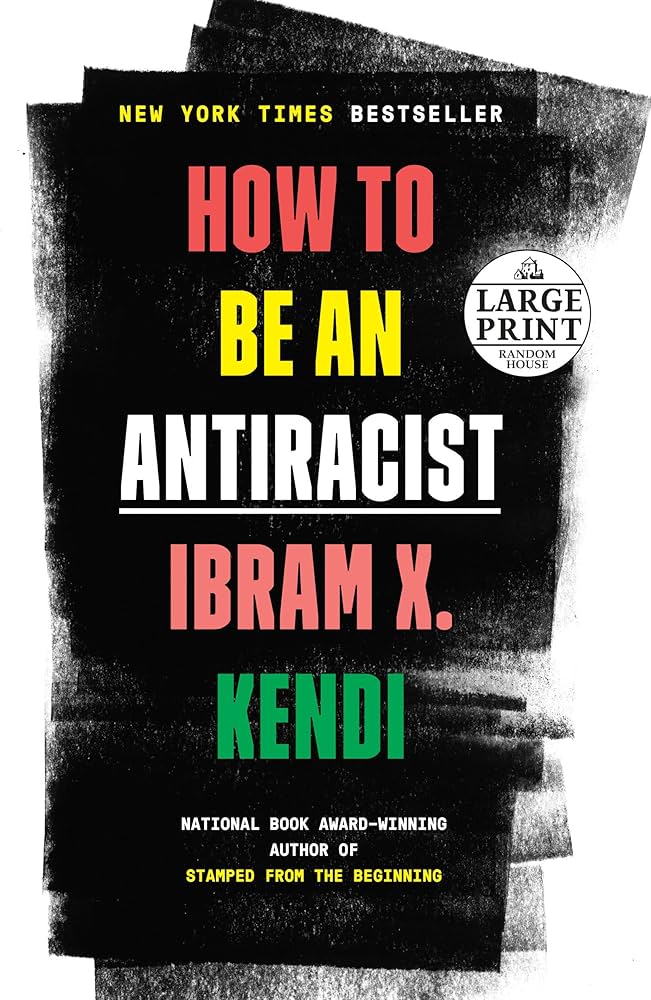
Racism is an invisible framework of power that may not be visible to people who are ignorant and who are not harmed by it. As a recently graduated high school senior, I think the first step to being a good antiracist is to recognize how the system benefits some people at the expense of others. This process begins with analyzing our environment and personal situation, even though sometimes it may be painful to consider our own identity and privilege. We should look within ourselves, recognize that we are part of a larger, unequal system, and see how we can work to change it. Ibram X. Kendi’s through How to be an Antiracist made me realize what it means to self-reflect on myself, challenging my relatively basic view of racism as something constructed and maintained by policy and cultural structure, as well also how our societal structure continues to enable it. Similarly, the “Wheel of Power & Privilege” is useful for illustrating how our identities, from skin color to citizenship, determine where we are in the intricate societall hierarchy. By reflecting on both my advantages and challenges as a South Asian immigrant, my understanding of privilege changed and was crucial for confronting systemic racism and for finding a meaningful place in the fight for equity.
To understand how racism is embedded in American culture, people need to realize how it impacts significant aspects of American life, including the legal system, schools, and housing. The impact of this system manifests itself in numerous sets of statistics that reveal stark and persistent racial disparities. For example, policing in the U.S. disproportionately targets Black Americans. The fear of these encounters often prevents people from fully participating in public life. For example, in policing, practices such as “stop and frisk” disproportionately target people of color more than others. A recent study on racial disparities in police stops in California discovered that while Black people comprised only about 7% of the population of the state, they were involved in 16% of all police stops (“White Privilege in a White Coat,” McFeeters). This disparity is even greater in the overall criminal justice system; nationwide, Black Americans, who comprise approximately 13% of the U.S. population, account for a staggering 37% of the prison population. The economic outcomes are equally bad because of historic redlining, employment discrimination, and pay gaps. Black households hold only about 15-20% of the wealth that white households have, making it much harder to escape poverty or invest in better housing and education. Modern racist policies, like those from Project 2025, for example, threaten to disrupt civil rights laws and dismantle affirmative action, which shows how racism within society did not disappear and can continue to happen if people aren’t properly educated on its harms. This would make college admissions, hiring, and health protections even less fair, pushing opportunity further out of reach for many Black and Brown Americans (Romano, “A Conversation on Race and Privilege”). Kendi explains in Chapter 4 that race is not biological but a construct used to divide and exploit groups (Kendi 54). In chapter 8, he continues to address issues stemming from racism, like colorism, noting that lighter skin is treated as more desirable even within ethnic groups. This leads to better treatment in school and work, representing a subtle but deeply harmful form of racism (Kendi 121). These laws and practices empower those with privilege, like people with lighter skin and higher income, while making it much harder for everyone else to find success or safety. Even health disparities, such as higher asthma rates in communities of color due to environmental racism, like factories and highways near minority neighborhoods, show how policy can shape life outcomes for generations (“Black Youth Project”).
The “Wheel of Power & Privilege” was a very useful tool for my self-analysis of my privilege and how it impacted my life. The wheel shows how various social identities, such as race, gender, sexual orientation, ability, and citizenship, indicate how some identities afford individuals unearned benefits like privilege, while others result in being treated unfairly. For myself, this reflection revealed a combination of marginalization and privilege. For example, I have significant privileges that I take for granted, like being a documented U.S. resident, I enjoy legal protection, access to social services, and political representation that is denied to undocumented immigrants. Being able to speak English, as is customary in this nation, has provided me with ready access to education and employment opportunities that may be difficult or impossible for non-native speakers. Additionally, as an able-bodied person, I can navigate public spaces and utilize services, from school corridors to public transportation, without confronting the physical and logistical issues that many disabled individuals must deal with daily. To acknowledge these privileges is not to self-pity in my guilt, but to consider the starting line where I began, which was a line much farther ahead than that of many others. I have also realized where I lack power since, as an Indian immigrant, I have experienced the burden of being “othered” and the pressure to assimilate into American culture at the expense of my heritage. This is a form of cultural marginalization that, although different from the explicit anti-Black racism that is deep in American history, shows how society can try to change identities that are not the “majority” or are “different”. Similarly, as a Hindu, my religious beliefs and practices are frequently misconstrued or minimized in a predominantly Christian society. These experiences, even though they prevented me from having experiences similar to those of many others, have also instilled in me a sense of empathy for those who are marginalized. Kendi’s concept of “dueling consciousness” resonates with me here, as in his chapter on “Black” he discusses the ongoing tension of navigating one’s identity within the expectations of a white-centered society. My own experience of immigrating from India at age nine involved a similar tension between wanting to fit in and wanting to hold onto my culture. Over time, reconnecting with my Indian heritage through my family and community helped me build my confidence and better understand others who experience a similar sense of exclusion.
Lastly, Antiracism, according to Kendi, is a process that involves recognizing the systems that perpetuate inequality and our parts in them, whether we are privileged or marginalized.
In Chapter 10, Kendi explains that “whiteness” as a power source is only problematic if it is used to exclude or oppress. The greatest threat is to let these long-standing systems go unchallenged, thereby perpetuating old hierarchies (Kendi 105). In Chapter 11, he stresses that each of us, regardless of our identity, can either be complicit in injustice through silence or combat it by speaking up (Kendi 134). Believing in equality is not enough; we need to interrogate the rules and habits that keep us comfortable while denying others the same opportunities. McFeeters and Romano both state that privilege is often invisible, yet it regularly provides some individuals with a head start or an easier way, since recognizing privilege is not blaming; it’s just using our privilege to change things. As the stage manager in my school drama club, I worked to make our show and auditions inclusive to everyone, including plays written by diverse writers and with unique viewpoints, and encouraged everyone, especially usually shy but talented people, to participate in planning and leadership. I have learned that it can be awkward to call out bias or “jokes,” but it is important to get people to think and challenge assumptions. When we hear from notable figures like Angela Davis and Jane Elliott, who promote open dialogue about privilege and advantages, we come to understand that genuine progress starts with uncomfortable but necessary discussions (“A Conversation on Race and Privilege”).
In conclusion, coming to terms with my privilege has changed my values and beliefs. It showed me that antiracism is not merely being “not racist” but is a dynamic, continual process that involves building connections, embracing people regardless of differences, and using my voice and power for the greater good. It has allowed me to make more authentic friends, be proud of who I am, and invite others to do the same, sharing and celebrating with them. Antiracism benefits everyone, especially in education, where it makes the system more fair; in the workplace, it creates more opportunities; and in society, it allows mutual respect and dignity for everyone. If you believe in equality, the next step is to take it from passive support to active engagement. That means fighting for policies that ensure equity, calling out discriminatory behaviors in your institutions and communities, and, most of all, recognizing your privileges and actively using them for social good. A long-term and dedicated commitment to antiracism has the potential to achieve permanent change, amplifying marginalized voices, minimizing systemic biases, and making society stronger for future generations to come, instead of continuing repetitive cycles of repeating racist policies.
Works Cited
`“A Conversation on Race and Privilege with Angela Davis and Jane Elliott.” YouTube,
uploaded by The Guardian, 7 Sept. 2018, http://www.youtube.com/watch?v=S0jf8D5WHoo.
Duckworth, Sylvia. “Wheel of Power and Privilege.” eCampusOntario
Pressbooks, 28 Feb. 2022, ecampusontario.pressbooks.pub/universaldesign/chapter/positionality-intersectionality/.
How to Be an Antiracist. By Ibram X. Kendi. One World, 2019.
McFeeters, Belinda Bennett. “White Privilege: The Invisible Advantages and
Apparent Disadvantages.” EBSCO, 28 May 2014,
Romano MJ. White Privilege in a White Coat: How Racism Shaped my
Medical Education. Ann Fam Med. 2018 May;16(3):261-263. doi: 10.1370/afm.2231. PMID: 29760032; PMCID: PMC5951257.
The Black Youth Project. “This Short Video Perfectly Illustrates the Meaning of
‘Privilege.’ 31 Oct. 2015,
blackyouthproject.com/this-short-video-perfectly-illustrates-the-meaning-of-privilege/.
 The Megaphone