Author: Harley Elizabeth, Edison High School
📍Stockton, CA
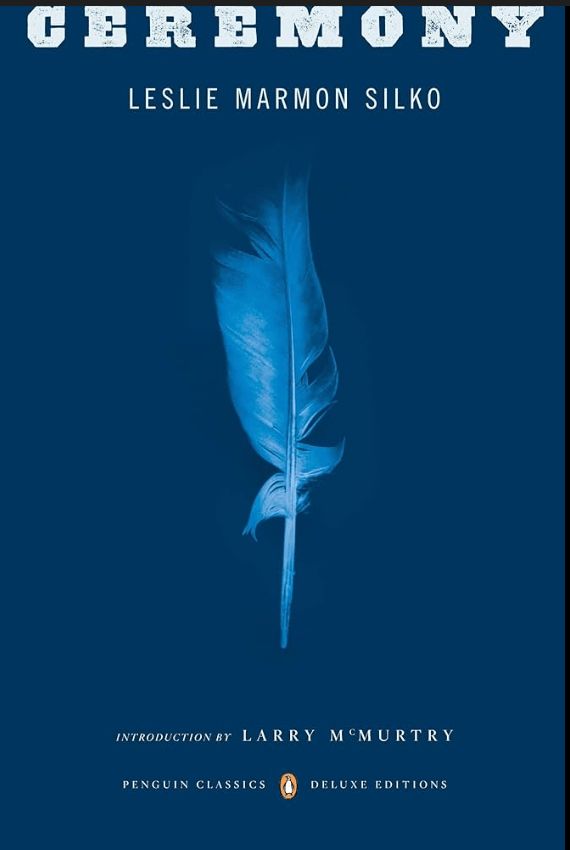
All we see of the world is what passes through our eyes. The things we experience and the things that are ingrained in us based on our experiences affect every inch of we process what passes through our eyes, and then our interpretation of that affects the next thing we see. It is through this that beliefs, impressions, stereotypes, etc are enforced and remembered. This is the most basic unit of perceiving, but one bad impression could loop thousands of times turning everything else “bad”. In the novel, Ceremony, by Leslie Marmon Silko, Josiah’s spotted cattle represent Tayo’s and the Native American’s relationships to nature, and how Tayo’s search for the cattle strengthens his relationship with nature, both his own and the external nature, and allows him to overcome and break free from baseless lies.
While sent overseas to fight in the white man’s war, Tayo’s relationship with nature becomes strained. Similarly, while he is at war, Josiah dies and his cattle get lost. This is referred to when Josiah said,
Cattle are like any living thing. If you separate them from the land for too long, keep them in barns and corrals, they lose something. Their stomachs get to where they can only eat rolled oats and dry alfalfa. When you turn them loose again, they go running all over. They are scared because the land is unfamiliar, and they are lost. (Silko 68)
Like the cattle to whom Josiah is referring, men who have been sent to war have been separated from their land. Additionally, the cattle forced into “barns and corrals” are being forced, by their white owner, against their nature, into said “barns and corrals,” and therefore, they lose something. Most animals are instinctually driven by nature, waking up and going to sleep based on the light outside as well as many other examples, however, domesticating them in the way the white farmers do severs their relationship to nature in its most natural form, because they experience only the controlled version of nature fed to them by their farmers, so they lose something and their stomachs become messed up. Their relationship to nature, both the external and their internal nature is ruined. Similarly, at war, men like Tayo and Rocky are forced to become people who can easily kill any opposing soldiers they encounter without any regard for their life as a human, by the American government, even though doing this is against their nature as people. Not only this, but they are physically separated from their land, fighting their own nature on the other side of the globe. For example, at home, Josiah had always told Tayo to treat all life, including the life of flies with respect. However, while in the jungle, fighting in the war, “Tayo had not been able to endure the flies that had crawled over Rocky;…He had cursed their sticky feet and wet mouths, and when he could reach them he had smashed them between his hands (Silko 94).” In the same way that the stomachs of the animals were messed with, and their stomach’s process of digestion has been changed, the way Tayo views life has also been altered and devalued. Additionally, Josiah says that in an environment like the one he describes, the stomachs of the cows are messed with and they “get to where they can only eat rolled oats and dry alfalfa.” This can be seen in Tayo as well, who after returning from war, has not been able to recover completely and has developed PTSD, a symptom of which is vomiting often, or an upset stomach. Josiah also says that after you turn these cattle loose, they “go running all over” because they are “scared because the land is unfamiliar, and they are lost.” This applies to Tayo as well because he is finding it difficult to find his place and who he is because of the time he spent at war and how his experiences there were directly in opposition to what he’d learned all his life from his tribe members. His view of life has forever been changed, and he is not able to as easily accept the words of his elders. Similarly, the Pueblos as a whole are going through something similar. New institutions and an entirely new scale of destruction and creation have been introduced, and even though Native Americans are in their home country, “the land is unfamiliar, and they are lost.” They have been forced into this world, one that denounces their culture and makes them feel utterly unaccepted. This separates them from their land, or “their culture” and they “go running all over” in search of who they are or who they should be.
The changes occurring in Native American culture are described as being exacerbated by the war, rather than caused. Rather than being brought on by the war, dislike of hybridity and the sentiment behind has existed among the natives before the began. An example of this is the ostracization Tayo faces for being mixed. Uncle Josiah however, is accepting of hybridity, as shown when the novel says,
See, I’m not going to make the mistake other guys made, buying those Hereford, white-face cattle. If it’s going to be a drought these next few years, then we need some special breed of cattle… The problem was the books were written by white people who did not think about drought or winter blizzards or dry thistles, which the cattle had to live with. (Silko 69)
As Josiah plans, he ends up raising cattle that is not purebred. Josiah’s cattle are a mix between the Herefords and the Mexican cattle, and therefore, have many natural advantages which come from combining the good parts of each breed, compared to the breeds on their own. Like the Herefords, Josiah’s cows are covered with meat, but they are tough too, like the Mexican cows, and are able to withstand drought. However, Auntie does not see the value in these hybrid cattle and even calls them “worthless” at one point. Similarly, the white people, whose science books affirm the quality of the Herefords above all other cows, and Rocky, who believes deeply in the science books, do not acknowledge the benefits of hybridity. Similarly, Auntie, as well as many other characters throughout the story are shown as disapproval of the fact that Tayo is mixed. Tayo also sees himself as “impure” and a stain on his family’s lineage for being mixed. Despite this, it is an unmovable truth of nature that hybridity is beneficial, and the cattle are a symbol of that fact. However, the “changes” posed by the introduction of white culture into Native American culture have instilled in the Natives, and Tayo the idea that hybridity is something that should be avoided. This distance between the truth of the usefulness of the cattle is part of an overall distance from nature, which strongly affirms the value of hybridity.
Finally, the process of retrieving the cattle brings Tayo closer to nature and allows him to recover parts of himself that were previously lost. This is shown when he says,
It was a cure for that, and maybe for other things too. The spotted cattle wouldn’t be lost any more, scattered through his dreams, driven by his hesitation to admit they had been stolen, that the land – all of it – had been stolen from them. The anticipation of what he might find was strung tight in his belly (Silko 178).
Here, the “dreams” refer to the PTSD-induced memories his environment and mind constantly bring to the forefront of his mind, causing much emotional stress and guilt to him. Previously, as he says, the spotted cattle were “scattered through his dreams,” as a representation of his guilt for the things that occurred when he went to war. He feels guilty about Rocky dying, praying the rain away for his people, and the fact that when he was away at war, Josiah had to care for the cattle on his own and ended up dying, whereafter, the cattle got lost. Tayo felt incredibly guilty about having to forsake this duty of his in particular. However, finding the cattle and discovering the fact that they were stolen by a white man “cured” his guilt. He was forced to confront the fact that it was difficult to accept that it was a white man who stole his cattle, and Tayo realizes that that so much of what he has been told and what the Native Americans believe and hate themselves for, are untrue and are based in racism and internalized colonization. A belief like, only people of color will steal leads to distrust and hatred for one’s culture and has the potential to destroy a culture as a whole from the inside, out. However, because Tayo realized this, he has been able to break free from the lies and recover the truth about his culture and his people. Further evidence of the Tayo’s increased connection to nature developed through the ceremony of finding and retrieving the cattle is his relationship with Ts’eh. Ts’eh is the personification of a mountain, who Tayo is led to by his search for the cattle, and later falls in love with, representing his connection to nature. Ts’eh shows him how to care for nature and gives him a place in this world, one that replaces his previous duty to Josiah but is still detached from the expectations that come from the lies he just unveiled to himself. Similarly, his village as a whole has, throughout the story, been shown as feeling ashamed of the way they are, especially after returning from war, Auntie is an example of this, shown by the way she welcomes her Christian friends, but doesn’t want to interact with the Natives who are suffering due to alcoholism. She feels guilt and is embarrassed by it. However, this alcoholism is not the fault of the Natives, but rather the war they were forced into by the white man. Additionally, Tayo begins to recognize the value of existing in between boundaries, not just in terms of race, but also how his unique relationship to time allows him to recall things and apply Josiah’s advice from the past more seamlessly.
To conclude, through his recovery of Josiah’s cattle and the truth, Tayo is able to recover parts of his culture that are being lost by others and were by him. The lies he was told by the white people and the Native Americans who believed them as well had an inconspicuously large effect on his life and the way he saw the world. Discovering the existence of these lies, and the fact they are, in fact, lies, allowed him to break free from them and the unrealistic expectations they posed, and instead, made room for him to find a place in the world that was based on himself, and not the ways in which he is supposed to belong to certain classifications or boundaries.
 The Megaphone