Author: Harley Elizabeth, Edison High School
📍Stockton, CA
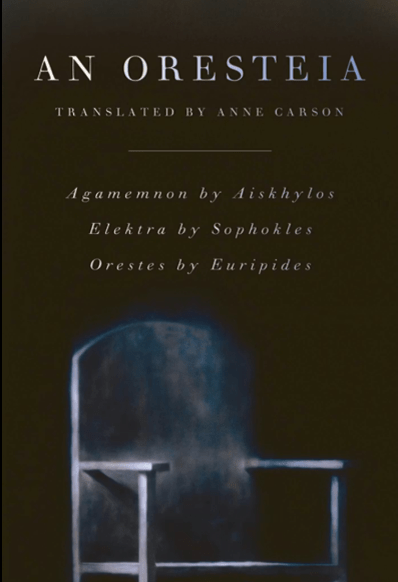
Objective sadness is associated with the display of negative emotions and is something the people around us encourage us to get rid of. In the ancient Greek play, An Oresteia, the character of Elektra received similar feedback. This can be a symbol of her story, and the fact that, as a person with a strong internal moral compass, as opposed to someone who adopts the values of the tribe, Elektra often displays emotions in unusual, non-objective/standard ways. In ancient Greek society, women were secondary citizens and were supposed to act only within patriarchal ideals of femininity. These ideals include submitting to men, being emotional, agreeing with the men around you, and etc. Living with characteristics of such nature as your description does not leave room for much of an identity or ability to uphold a moral compass as a woman. However, Elektra uses her emotional lament to sustain herself, in the defining aspects of both morals and her identity.
Elektra’s recurring likening of Procne the nightingale to herself shows how Elektra uses her lament as her means of taking action. This is shown best when she says,
And how I could nestle myself in a life of ease
…
My cries are wings:
They pierce the cage, (Carson 98-99)
To begin, by explaining herself using bird comparisons, like referring to her cries as “wings” which “pierce the [bird] cage”, and bird jargon, such as “nestle”, she is likening herself to Procne, mother of Itys. Procne’s sister, Philomela was raped and her tongue was mutilated by
Procne’s husband, Tereus. When Procne found out about this, she put revenge for her loved one over all else and killed her son, Itys, before serving him to Tereus. After Tereus found out, he ran around, chasing the sisters with an ax. However, the gods took pity on them and turned the three of them into birds, most notably, changing Procne into a nightingale. By likening herself to Procne by comparing herself to a nightingale, she is showing that she agrees with the choices made by Procne, specifically, the idea that creating justice for your loved ones is the most important thing. This justice, however, is usually created by taking action to counteract the unjust action. This poses a problem for Elektra, and women, in general, could not take action for themselves, because by doing so, they would (usually) be doing what only men are supposed to be capable of, proving themselves as unfeminine. However, as she states, Elektra cannot, “nestle [her] myself/in a life of ease,” and must uphold justice and the honor of her loved ones. Elektra takes necessary action by lamenting, which masks this action with over-dramatic, womanly emotion. This is shown best when Elektra refers to her cries as “wings” because they allow her to take flight without actually doing so. These wings give her a voice in the patriarchal society in which she must preserve her moral code by allowing her to “pierce the cage” which limits her ability to take revenge as Procne did, without her femininity being stripped from her; they are a (loop)hole in the cage placed on all women. This comparison also highlights how her lament is feminine action, as bird cages are not meant to be pierced by wings; they are meant to trap birds, and wings are far too soft to break most cages. Similarly, the cage of ancient Greek ideas of femininity traps all women, and even if they do take action in a masculine manner as Klytaimnestra did by killing her husband, the odds are still stacked against them, as shown by Athena’s decision during Orestes’ court case, where she said that Klytaimnestra’s killing of Agamemnon was a greater crime than Orestes’ killing of Klytaimnestra, solely because she didn’t want to give greater honor to a woman who killed the “master of her house”, and Klytaimnestra died dishonorably. Elektra’s lament, like the wings of a bird, are soft and feminine and are supposed to exist as a result of the cage and be contained by it. Her wings pierce the cage by staying inside of it because lament is emotional and inherently feminine. Additionally, on page 118, Elektra refers to her mother, Aigisthos, and evils in general as a “punishment cage/locked around [her] my life.” Her lament allows her to express herself and not be quiet in the face of evil, without taking action.
To add on, Elektra equating her lament to food shows how her lament sustains“Elektra”, as in Elektra’s identity. She does this when saying,
You can have your rich table
and life flowing over the cup
I need one food:
I must not violate Elektra. (Carson 105)
To begin, when Elektra says, “I need one food:/I must not violate Elektra ”, she is referring to her moral code and her lament. As stated in the first paragraph, Elektra uses her lament as her means of taking action, and by comparing it to food, she is referring to how her lament safely upholds her moral code. Next, by making her name, which represents her, a human, synonymous with her moral code, which she compares with food, by saying that she, “must not violate Elektra”, she is amplifying just how important of a role her moral code plays in her identity and her sense of self, and also how upholding this moral code with her lament assures this sense of self, similar to how food keeps humans alive. Additionally, throughout the story, almost everyone from the Chorus to Chrysothemis tells her to stop lamenting and to get over things, which is what everyone else does; it is the food that sustains everyone else. Elektra doesn’t care about what satisfies everyone else and is mostly interested in upholding what she thinks is right. For example, she wanted to have Klytaimnestra slain even though the people of Mykenai would have disliked this (as they did). Also, Chryosothemis did not want to kill Klytaimnestra because of the consequences it would bring; the decision to do so would not result in her best interests. However, Elektra doesn’t care about what the consensus thinks is “right”, and nor does she care about what is best for her. She doesn’t want a literal “rich table/and life flowing over the cup” because they can’t satisfy her. She can only be satisfied by feeding her internal moral code with the food of her lament.
Finally, Elektra it fullfils her duty as it pertains to her morals and being a woman; Elektra is proud of her lament. This is best shown when she says,
Lament is a pattern cut and fitted around my mind–––
like the bird who calls Itys! Itys! endlessly …
O heartdragging Niobe,
I count you a god:
buried in rock yet
always you weep. (Carson 94)
To begin, in this section of the text, Elektra brings up Niobe, whose children were slain by Apollo and Artemis in response to Niobe’s defamatory bragging against the mother of Apollo and Artemis. Niobe was grief-stricken and asked the gods to end her pain. Zeus took pity on her and turned her to stone, where she weeps in response to the death of her children. Similarly, Elektra lamented in response to her father’s death. When Elektra says that she counts Niobe as “god” for always weeping despite being “buried in rock”, she shows that she views lament as a duty, instead of a natural expression of emotions; it is something she does for others and not herself. Lament is her means of taking action against injustice, and lamenting in response to justice, as her moral compass tells her, is her duty as her father’s daughter. Fulfilling this duty is important to her and is a part of her identity, as shown by the fact that she counts Niobe to be “a god”. She says god specifically because Niobe is unaffected by the fact that she is a rock, a symbol of stoicism and emotionlessness, and continues to lament. Next when she says that “Lament is a pattern cut and fitted around/my [her] mind–––”, with the phrase, “like the bird who calls Itys! Itys! endlessly”, where she likens herself to Procne, who was the mother of Itys. This time, instead of focusing on the moral aspect of Procne’s story, she is focusing on the fact that Procne is the mother of Itys, likening herself to a mother. By doing this, she is saying that her lament allows her to also fulfill her duty as a woman. Elektra as a character constantly aligns herself with the men she cares about, even often saying that without them, she can have no happiness. She is very loyal to the two of them and sides with them, and against the people who are against. For this reason, she dislikes Klytaimnestra and thinks of herself as a better mother because she is more loyal to the two of them and is more feminine and caring. She wants to help them by being the mother instead of Klytaimnestra. Being loyal to Agamemnon and Orestes is something she believes is morally right, and therefore, same with her morals, being the mother is part of her identity. Throughout the story, Elektra tries to strip Klytaimnestra of her motherhood of Orestes. When she uses the words “pattern” and “fitted” about her lament, she is talking about how emotions and morals come naturally to and are part of her, unlike with Klytaimnestra who is cunning and man-minded. Showing that she is, therefore, more suited to being the mother figure. Also, when comparing this naturalness with the endless crying of a mother nightingale, she is saying how motherly care comes naturally to her. Lastly, the phrase, “angel of Zeus” contrasted with, “bird of death” when referring to Procne further proves that this is what Elektra thinks. In this scene, the Chorus is telling her to get over the death of her father and Elektra says that she can’t, similar to how the nightingale endlessly calls for her child. This nightingale (and Elektra) is a “bird of death” to others because they are eternally sad and can only think negatively. Also because in revenge, they both killed people, causing them to be seen as morally inconsistent. However, Elektra knows she is right because she thinks Zeus agrees with her since he took pity on Procne and turned her into a nightingale.
To conclude, Elektra is sustained by her lament. She does this by sustaining her moral ideas by using lament as her means of taking action and using it to sustain her identity and sense of purpose by upholding this moral compass and making a duty out of it. While Elektra is not a character who directly challenges the Ancient Greek ideals of femininity and often upholds them herself, she is one of the only women in this trilogy to reach success, and stay on the good side of the ancient Greek audience for that reason. She blended in with others and didn’t act outside of what was expected of a woman, and due to this, was able to sustain herself and all of her needs in a society designed only to sustain men.
 The Megaphone