G. Li, Editor-in-Chief, V.Iyengar, Editor-in-Chief
📍 Silicon Valley, USA
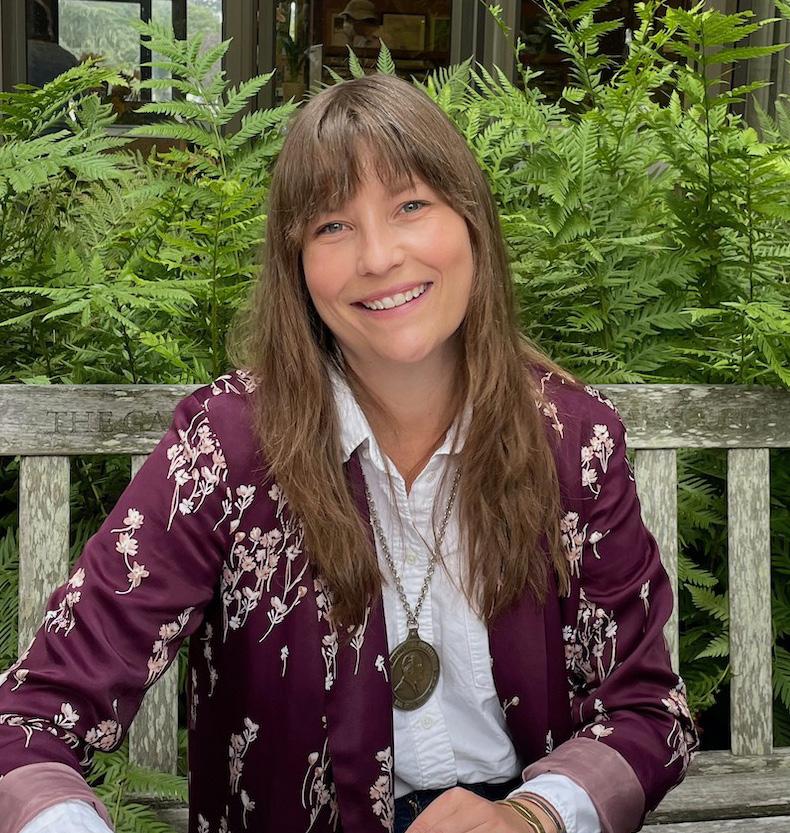
Nicole Meldahl is the Executive Director of the Western Neighborhoods Project and the host of the Outside Lands Podcast. She is an accomplished archivist and historian, and works with the Golden Gate National Recreation Area and as a freelance historian and contract archivist. In this interview, we interview Meldahl to explore the role of public history in tightening community bonds and the pathways to local perspectives and understanding brought by podcasting.
Grace Li: Hi! So, I’d just like to kick this off by thanking you for agreeing to interview with us again. It’s really nice that you’ve taken the time out of your day to be interviewed by us! And we love your podcast and what it stands for.
To begin, we’re wondering what inspired you to join the Western Neighborhoods Project in the first place.
Nicole Meldahl: I’ll try to make this very long story short. I grew up always loving history. I had uncles, all kinds of people in my life who loved history. And so, it was all around me. Plus, I grew up going to work with my dad and he worked for the horse racing industry in Southern California. He was a jockey’s agent at a racetrack called Santa Anita.
And so I got to hang out with a bunch of old timers who would just sit around and tell me weird stories. And that’s not that dissimilar from what public historians do. So I just had this love of hearing people’s stories from a very early age. And then I came up here for school. I went to San Francisco State University and kind of took the long route there and ended up declaring as a history major after lots of soul searching and then got an internship with the Park Archives and Records center at the Golden Gate National Recreation Area (GGNRA) where I learned how to be an archivist and how to catalog museum collections.
I was doing that for a few years and then I decided, okay, well, I think this is a career that I want to do, so I should probably work on my resume a bit and start trying to find other places to volunteer. And while I had been with the GGNRA, I met a retired park ranger named John Martini, and he worked with the Western Neighborhoods Project. So I thought, I’ll just send them an email and see if they need my help. And I sent a terrible email. It was very stiff.
It was like, “to whom it may concern, if you are in need of such qualifications …”. And actually our co-founder, Woody LaBounty found that when I took over as executive director and he sent it to me again. So that was quite funny. But yeah, I wandered into this organization that was all volunteer at the time in a very small, very strange studio that was probably illegal.
And David Gallagher and Woody Labounty, who founded the organization, really took me in, so sort of thought I could do more beyond just organizing and cataloging historic materials. And so they encouraged me to do more public facing things like be on the podcast and then lead history walks. And then I joined the board of directors. And then in 2019, when Woody got a job offer he couldn’t refuse, I stepped in as executive director. So a whirlwind journey.
Grace Li: That’s an exciting journey!
Vrinda Iyengar: Yeah. So you talked about, like, your experience being an archivist and working in museums. So I was just wondering, how does your background in archives and like museum studies influence the way you approach storytelling in your podcast?
Nicole Meldahl: Well, everything’s fact based, right? So many people have podcasts now and it’s very easy to sit down with your friends and to chat about things, but we rigorously research and pull information from first person original documents. So we bring a historian’s methodology to using archival materials. But I, as an archivist, I think because I’ve worked in archives throughout the city, I sort of know where a lot of them are.
You’d be amazed how many pockets of archives there are all throughout San Francisco and California. And because it’s a small community, you know, we all hang out together. There’s information sharing within this professional network that doesn’t always include historians and people who tell stories about the past for a living. So in that respect, the experiences that I’ve had in my career so far, working with the materials directly, then working front of house in visitor services with the California Historical Society, and then working on the exhibitions team at the Walt Disney Family Museum, I’ve been able to see. And then in leadership positions and governance positions with Western Neighborhoods Project, I’ve been able to see how all the elements of the museum and archives work.
So it really helps me tell better stories and manage our volunteers in a way where, you know, I’m creating materials for people who are working front of house. I should say I’m able to give them the resources that they need that I always wanted when I was doing the work that they were doing. So, yeah, my whole career path has made me, I think, really nimble as executive director. And it brings a unique viewpoint to, a multi dimensional viewpoint to the podcast that, that we record.
Vrinda Iyengar: Okay, yeah.
Vrinda Iyengar: Yeah, so your podcast focuses on more local and smaller scale stories that wouldn’t make it into traditional history books, and that’s one of the reasons why we were really drawn to your podcast and we found it really interesting and entertaining. But, in your experience, have you come to any realizations on why you think that sharing these stories is so important?
Nicole Meldahl: So I guess there’s two things I can speak to in that question. So one is that the podcast is casual. It’s a casual format. So you don’t feel like, “oh, gosh, I’m attending a history lecture right now, how boring”. History is super fun and interesting, but it’s often communicated really poorly. It’s really stuffy or too dense, or there’s a focus on famous people or people who do monumental things, you know, and those people are hard to relate to.
It’s hard to feel a personal connection to someone who started a humongous bank or was president or whomever. And so finding the stories that are relatable help us not only get invested in history, but understand the neighborhood that we’re from. So Western Neighborhoods Project was founded to tell stories through the community’s point of view. And the stories that I’m drawn to are often not like the meta narrative of San Francisco history, which is very event based or important person based; I’m interested in who built the house next door and why.
Like the bar that’s been around forever or the grocery store that’s been passed down through five generations. Or, you know, we kind of joke that we’re the friendly neighborhood history organization, because if you’re just out and about in the neighborhood and you’re like, “what’s that thing?”, you can email us and I’ll look into it. So, yeah, that’s the fun part. And it’s so much more interesting, I think, to hear stories about people just like you.
Vrinda Iyengar: Yeah, I think that makes sense because when I was listening to your podcast, it didn’t feel like a normal history lesson because it was easy to feel personally connected to the stories you were telling and the stuff you were talking about. So, yeah, that was really cool.
Nicole Meldahl: Thank you. Then we’re doing our job well! Also, the real secret is we’re all just friends who are curious people who just like hanging out together and doing this work. So, you know, when you hear us giggling or you hear us doing whatever, it’s. It’s genuine. We just love hanging out together.
Vrinda Iyengar: Yeah.
Grace Li: Yeah. Okay, so another question that we had is, once you have a topic, how do you go about structuring the episode around a certain story? And we were wondering if you would make an in depth script or if episodes are more improvised. And what do you think is the best way to tell a story, especially with the podcast?
Nicole Meldahl: Oh, gosh. So since I’ve taken on as the lead host, we do different types of podcasts, right. We’ve got what we call straight history episodes, and those are thoroughly researched and pretty tightly scripted episodes. Although, as I’m sure you’ve noticed, we go off script a lot, just jibber jabbering, but we always come back to the scripted narrative. And then we also have interview podcasts, so those are very much not scripted.
We have talking points set out kind of like you sent over for this interview today, so our guests understand where things are going. But also just in case, for whatever reason, a guest comes on for recording and we have nothing to say to each other and there’s just no vibe. So these give us something to go with. And then we have the business portion of the podcast that just talks about upcoming events and shakes people down for money and gives you a preview of what’s coming next. But our Short Stack series, where I’m joined by our board member, Rebecca Kim, is very unscripted.
We do some cold reading from newspaper articles and things that our producer, Drew Moss has pulled together for us, but really we’re just sitting there and sharing stories about things that have come up. A lot of it gets a little political these days, as you might imagine. But not in an unstructured way, I should say. We’re really focused on political movements or situations that impact us as public historians and as librarians and archivists.
Vrinda Iyengar: Yeah. And going back to the thing you mentioned about your Short Stacks segment and your podcast in general, we were wondering if you decided on the more conversational tone of your podcast as a way for it, as a way to keep the stories you’re telling easy to understand and accessible to the average person without sacrificing historical accuracy.
Nicole Meldahl: Yeah, well, that is a conscious decision of our organization as a whole. I wouldn’t say it’s specifically targeted for the podcast. You know, we call ourselves the Friendly Neighborhood History Group. And that’s because we’re approachable, we’re casual.
It’s not like some historian standing up at a podium telling you what your life is about. You know, we’re just chitchatting. So, yeah, it really is a conscious approach to the way we communicate history across all of our channels, but also understanding that different mediums respond better to different perspectives and tones of voice.
So if you go to our website, sometimes you’ll find really comprehensive footnoted articles that are more dry. But that’s the ultimate resource, right? Where you can key term search and can be referenced in a paper. Then we have our podcast, our social media channels. That’s all very much more off the cuff and more casual, more approachable.
Because when you’re going to look for information or you’re scrolling on Instagram, you don’t want to lecture. You’re like, “I want to look at something cool and learn one thing about it”. So it’s a mindful approach to try to meet people where they’re at. It’s the same thing when I’m doing lectures. You know, I’m not trying to overwhelm you with information. I want to show you really cool things and give you a couple bits of information and entertaining anecdotes about something. That way I’m not exhausting you. You’re not sitting in a room like, “oh my gosh, so many dates and information have been thrown at me”. We’re just sort of like all in this fun journey together.
(Continued here)
 The Megaphone