Author: V. Iyengar, Megaphone Editor-in-chief
📍Palo Alto, CA
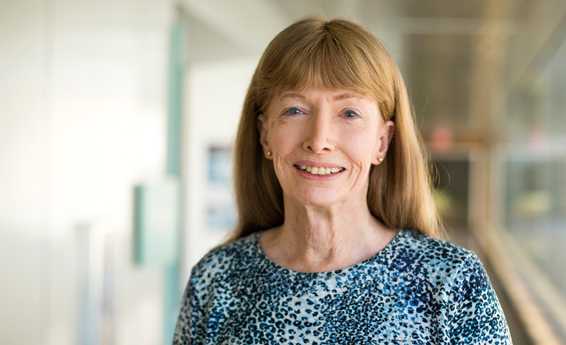
Cover image from the University of Michigan
This past June saw the passing of one of Silicon Valley’s most influential tech pioneers, Lynn Conway, a computer architect active during the 1960s-70s, who left behind a legacy of remarkable intellect and and inspiring bravery.

Image from Wikipedia
Conway was born in 1938 in a middle-class New York town, where she grew up as a shy child with a passion for astronomy who struggled with gender dysphoria. She graduated from Columbia University in 1963, earning both a B.S. and an M.S. in Electrical Engineering, and then moved to the Silicon Valley to work on for IBM on a supercomputer, making strides in the field during her time there. However, it is around this period of her life that Conway began to transition, and upon hearing of her plans, IBM fired Conway, leaving her without a job and without connections. It is at this time that Conway struggled the most; after she was fired, her support system collapsed, with the people who had previously supported her losing confidence in her decision to transition. Despite being without anyone except her doctors to support her, Conway powered through her transition and re-entered the industry under a new name, beginning her career all over again as a contract programmer.
Despite having to restart in this way, Lynn says that after transitioning, she had been happier than she had ever been. Not only that, but her career began to take off once again. In 1983, she got a job at Xerox’s PARC research lab, now famous for inventing the computer mouse and the digital desktop interface. It is at Xerox where she began collaborating with Carver Mead at Caltech to develop VLSI, or Very Large Scale Integration, which enabled the integration of millions or now even billions of transistors to exist on a single chip, which far surpassed the first commercial MOS (metal-oxide-semiconductor) integrated circuit introduced in 1964, which only allowed the integration of more than 10,000 transistors in a single chip. The design by Mead and Conway saved microchip area, allowing more transistors to be integrated on a chip. VLSI reduced circuit size, increased cost-effectiveness for devices, and improved the operating speed of circuits, and ended up being vital to future developments made in Conway’s field. And just like that, only 10 years after her transition, in 1987, Conway was already on the verge of international fame for the advancements she made via VLSI.
Still, even in the face of all of this success, fearing the terrible fate that befell many transgender women of this time, who were beaten, gang-raped, murdered or driven to suicide when discovered by others, Conway kept her identity as a transsexual woman a secret for 31 years, telling only her closest friends and loved ones.
She went on to achieve numerous professional accomplishments, namely, becoming Professor and, later, Professor Emerita at the University of Michigan Ann Arbor, her work being built on by the Department of Defense, and universities around the world began to incorporate her seminal textbook on VLSI into their courses, before retiring in 1998.
After retiring, Conway began to realize that she had been unfairly left out of the computer industry’s popular history of her invention, due to her being a woman. In an interview with The Independent, Conway recalled her time working on VLSI with Carver Mead, saying, “Mead probably thinks it was 80/20 him; most people, I think, in the long term, will find it was really 80/20 me.”
In the same year as her retirement, her early work at IBM, pre-transition, was dug up and linked back to her. Although feeling scared at first, she realized that times have changed, and although things weren’t perfect, she decided to embrace it and tell her story.
Via her personal website, Conway has shared clear, detailed, and unprejudiced information about the experience of being trans and the process of transitioning, and has been a striking example of how trans people can find lasting happiness and success.
She passed away at the age of 86, leaving behind her story, which serves as point of inspiration and hope for people all over the world.
 The Megaphone