Author: V.Iyengar, Megaphone Editor-in-chief
📍Foster City, CA
Intro
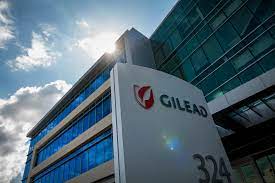
On December 22, 2022, the FDA approved Lenacapavir— or as it’s known by its brand name, Sunlenca®— a twice-yearly injection meant to prevent HIV infection in adults, declaring that the drug is safe and effective for its intended use. Almost exactly one-and-a-half years later, on June 20th of this year, Foster City’s Gilead Sciences Inc, the company behind Lenacapavir, issued a press release which stated that “Lenacapavir Demonstrated 100% Efficacy…for HIV Prevention.” But what exactly does this mean, and why is it so groundbreaking?
The HIV epidemic first began in the US in 1981. Since then, around 86 million people have been infected with the disease, and despite decades of research that has gone into learning about HIV and its possible points of treatment, HIV remains curable only in certain, very special cases.
Although it cannot be cured, HIV can be prevented, a fact that is very important to individuals living in high-risk areas such as Sub-Saharan Africa, where nearly 1 in 25 adults are living with HIV.
Pre-Exposure Prophylaxis
HIV prevention is where Pre-Exposure Prophylaxis or PrEP comes in. PrEP is a medicine that can prevent contracting HIV from sex or injection, working by creating a protective barrier around CD4 T cells. HIV attacks and destroys CD4 T cells, weakening the immune system, and making it difficult for the body to fight off infections. When PrEP sets up this wall around CD4 cells, HIV is unable to infect healthy cells and replicate within the body.
The first PrEP medication approved by the FDA for people without HIV but are at a high risk of contracting it, was Truvada, in 2012, a once-daily pill produced by Gilead Sciences Inc. Since then, it has remained the leading PrEP medication worldwide, rivaled only by Desocvy, another once-daily, Gilead-produced PrEP pill. However, unlike Truvada, Descovy has only been approved for cisgender men and transgender women.
Another PrEP medication is ViiV Healthcare’s Apretude, approved in 2021, which is an injectable medication, like Lenacapavir, that must be given every other month, or 6 times per year.
PURPOSE 1
The promising results indicating Lenacapavir’s efficacy come from PURPOSE 1, the first of Gilead’s five prospective PURPOSE trials, which are a series of trials being conducted with the purpose of evaluating the efficacy of Lenacapvir when it comes to preventing HIV.
In the trial, over 5,000 Ugandan and South African women aged 16-25 were given the recommended doses of either Truvada, Descovy or Lenacapavir. Of the 2,134 women and girls dosed with Lenacapavir, there was not a single case of HIV infection, whereas both the groups dosed with Truvada and Descovy each had an incidence of ~2.00 cases per 100 person-years (measurement which multiplies the number of people in a study by the time each person spends in the study).
What these results mean
As mentioned before, Truvada, the first PrEP medication, was approved in 2012, and, according to the CDC, PrEP reduces the risk of getting HIV from sex by about 99% and reduces the risk of getting HIV from injection drug use by at least 74%. Despite the high effectiveness of PrEP medications that have been displayed for over a decade, few are actually taking it.
A study done at the Johns Hopkins University’s Bloomberg School of Medicine revealed that fewer than 25% of the 1.2 million people who are at a high-risk of contracting HIV take PrEP. What’s more is that, according to another study done at the JHU Bloomberg School of Medicine, of the people who have been prescribed PrEP, nearly 1 in 5 people with a new PrEP prescription delayed or never filed it and about 75% of this group still had not picked up their PrEP a year after receiving it. According to Keri Althoff, an associate professor of Epidemiology, “Some people face higher barriers to routinely picking up a prescription and taking a medication,” and these barriers only get bigger and bigger as you go into less developed countries, as well as poorer areas of more developed countries, regions whose inhabitants are at the highest risk of contracting HIV.
In contrast to other PrEP medications, Lenacapavir only needs to be given once every six months, which is a much lower requirement of commitment than is expected by other aforementioned HIV preventative medications. In a statement given to NBC News, founding executive director of the nonprofit Prevention Access Campaign, which is working to end the HIV epidemic, Bruce Richman stated, “It’s really important to have more options than daily pills because the orals aren’t going to get us to the end of the epidemic. We need to make sure that people have options to fit with their lifestyles.” The long-acting nature of Lenacapavir could usher in significant positive change in terms of the state of HIV worldwide by increasing the accessibility and the number of options that PrEP is available in.
Gilead’s Role
When Descovy hit the market in 2016, Gilead faced immense criticism over its pricing of the invaluable medication, which carried a list price of almost $26,500 per year. Gilead has also faced criticism for its pricing of several other drugs, one being remdesivir, a treatment option for COVID-19 patients.
In the press release detailing the results of the PURPOSE 1 trials, Gilead promised that they are “committed to partnering with communities that are disproportionately affected by HIV in their respective countries,” and said they plan to further update with plans on how to address access to the medication in countries with high incidence rates of HIV.
The HIV/AIDS pandemic is one of the largest ever, as of 2024, with a death toll of over 43 million people worldwide, and it continues to affect individuals living in less developed countries at alarming rates. So, it is imperative that we work to make the virus as benign as possible. However, this can only be done if Gilead sees this promise through and commits to making Lenacapavir as cost-effective as possible to people living in areas with fewer resources, where HIV incidence is the highest worldwide.
 The Megaphone